We Wonder,
We Build.
Starborne is building the hardware layer of the next space age. Our systems are engineered to survive where physics is hardest, manufactured by physical AI capability that compounds with every part we build.
How We Build
We build at the edge of what materials can survive.
Getting to orbit used to be the hard part. Now that it is routine, the difficulty has moved to the hardware, and to whether it can be built well enough to survive where it is sent.
 The environment
Hardware that has to work the first time, and keep working
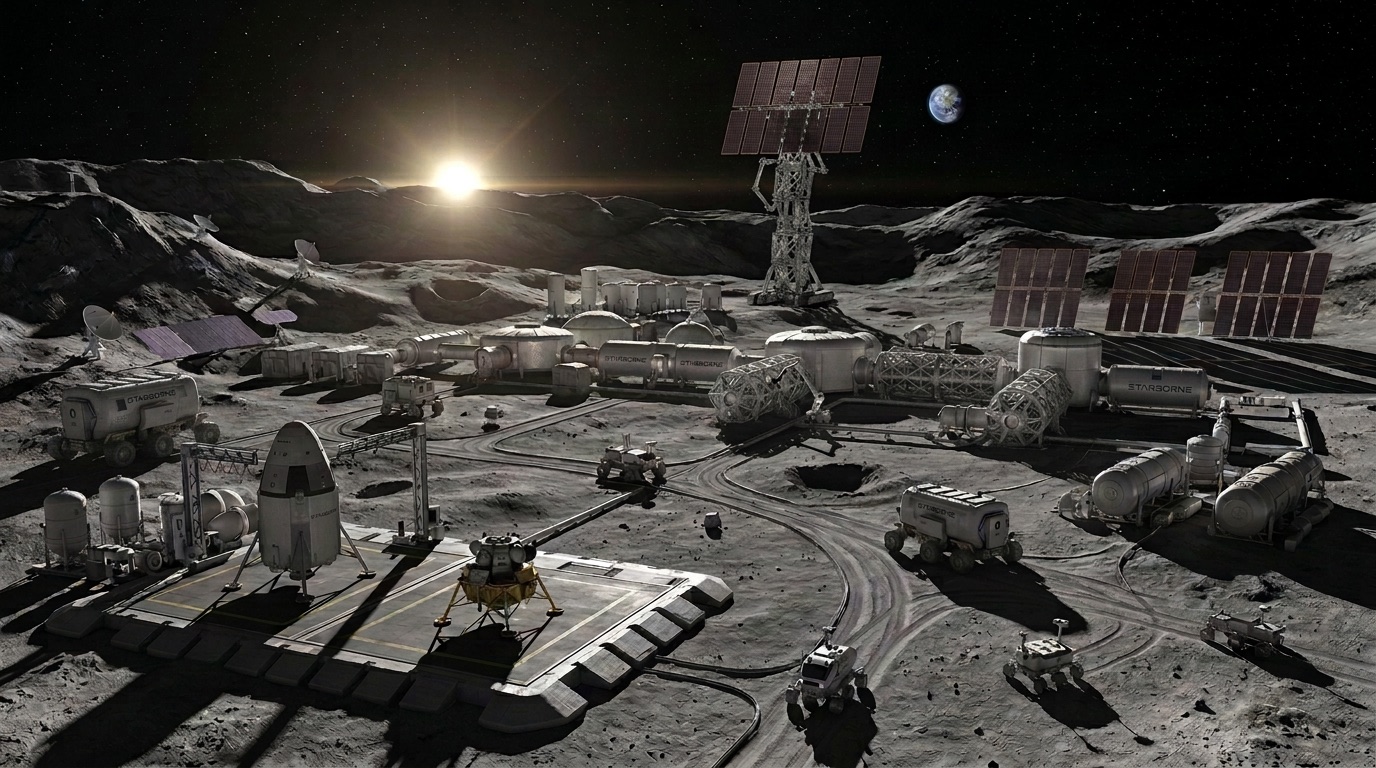
On the lunar surface a structure sees three hundred degrees of swing between day and night, every fourteen days, for years. In vacuum there is no convection to carry heat away. In deep space the nearest replacement part is months from arriving, if it is coming at all.
Those conditions rule out most of what modern manufacturing takes for granted. There is no maintenance window, no second attempt, and no margin to be found later by inspecting a part more carefully.
 The design
New missions need designs that extend what hardware can do
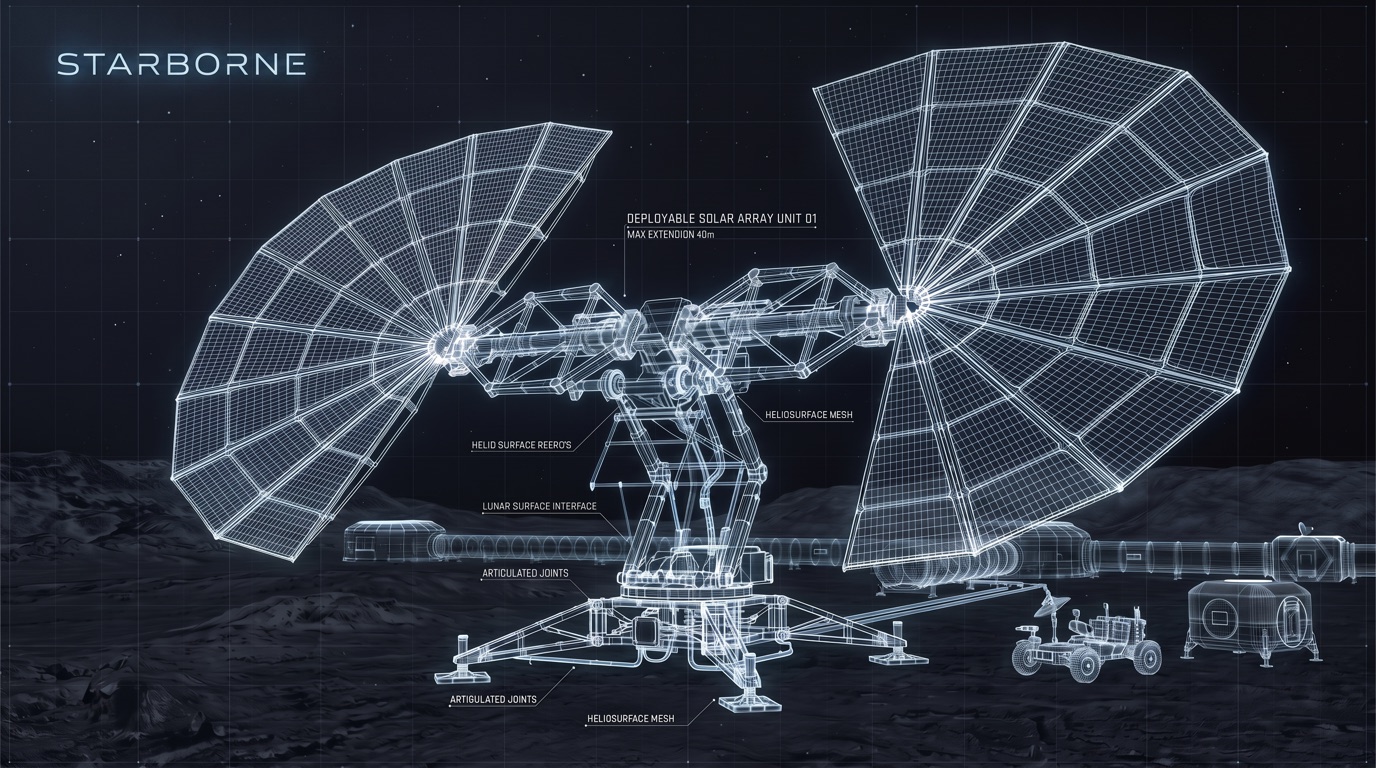
Next-generation space systems ask more of their hardware than any previous generation has. A radiator has to shed heat into a vacuum, where there is no air to carry it away. A structure has to hold its tolerances through years of expanding and contracting as the temperature swings. A power system has to run for a decade with nobody there to service it. Each of those is a design problem long before it becomes a manufacturing problem.
Meeting demands like those calls for a genuine step forward rather than a stronger version of what already exists, and pushing that boundary is what Starborne is built to do. We take on the design ourselves because a system that reaches this far only works when the material, the shape and the way it is made are developed as one idea.
 The process
A new design needs a new way of making it
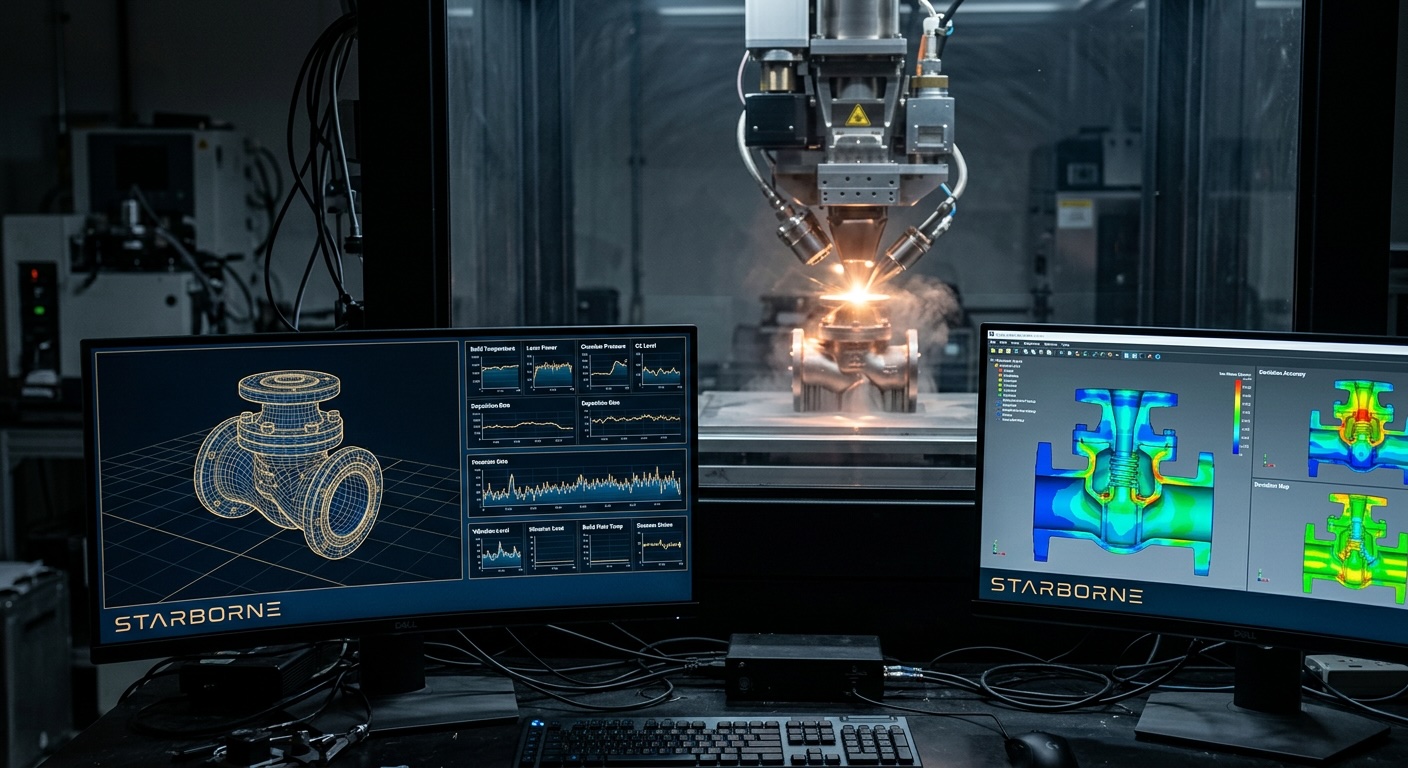
When a design is genuinely new, there is usually no established process for building it either. The materials that survive these environments happen to be the most difficult ones to form, and they take their final shape inside sealed furnaces where nobody can see what is going on. By the time a part has cooled enough to measure, whatever went wrong is already permanent.
So we build the instruments into the furnace. Our sensors are made to tolerate the heat and the pressure without needing a clear line of sight, and they feed a physics model that knows what the process should be doing at each moment. When a run starts to drift, we can correct it while it is still going instead of finding out weeks later. Every part we make teaches that system something, so the next one comes out better.
Where we are working
One problem, in several places at once
Next-generation aerospace vehicles
Vehicles for sustained high-speed flight and for the kind of high-energy return that has to be survivable more than once.
Lunar and deep-space infrastructure
Thermal systems, structures and surface power hardware, built for places where the nearest replacement part is months away.
What comes after
Planetary entry, aerocapture, cislunar transfer and in-space manufacturing all sit inside the same problem, and we are building toward them.
Get in touch
Start a conversation
We are actively talking with defense and civil space program offices, prime contractors, university research groups, and investors working on long-horizon hardware.